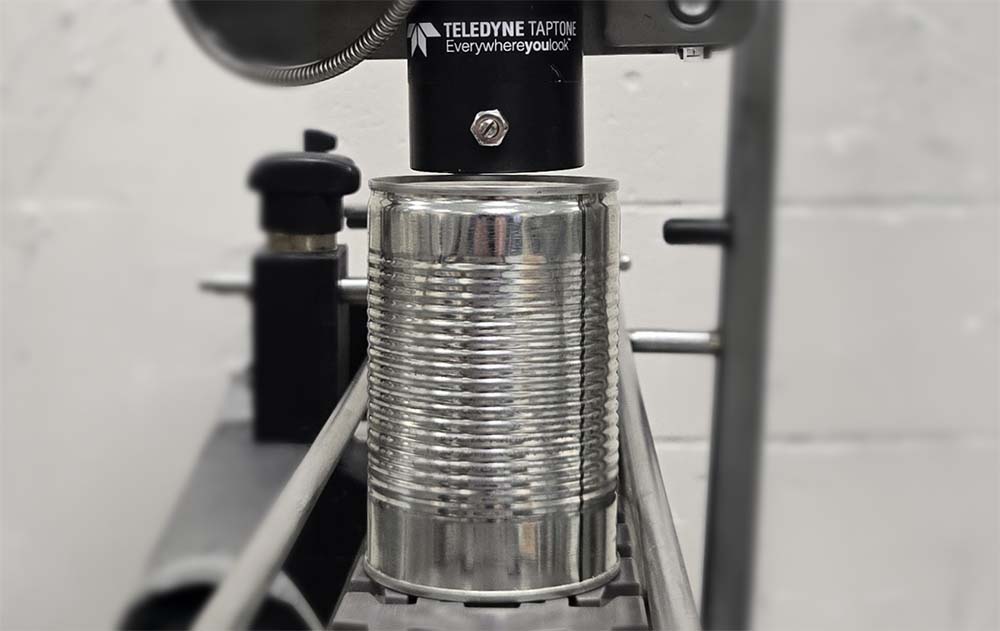
Tested: Regular Sanitary Can Ends and EZ Open Can Ends
Inspection Requested: The purpose of this test was to prove the effectiveness of the TapTone -RTV-P Sensor in testing metal cans for vacuum integrity. If vacuum integrity cannot be verified in a container on the production line, there is likely a leak in the can. Leaks not only damage brand image, but also provide an entry point for contamination of the product, and potential health concerns for your consumers. The TapTone -RTV-P sensor can test both sanitary ends and pull-tab cans. This system is ideal for finding potential leakers in a variety of cans before they leave your processing plant.
TapTone Equipment Used:
TapTone Proximity Sensor
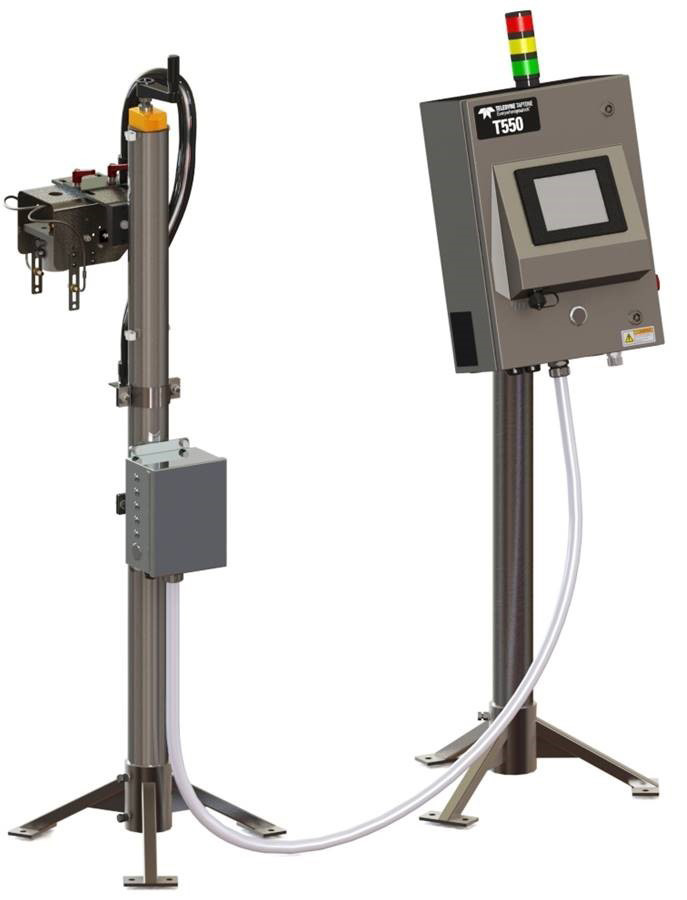 How does the TapTone Proximity Sensor works?
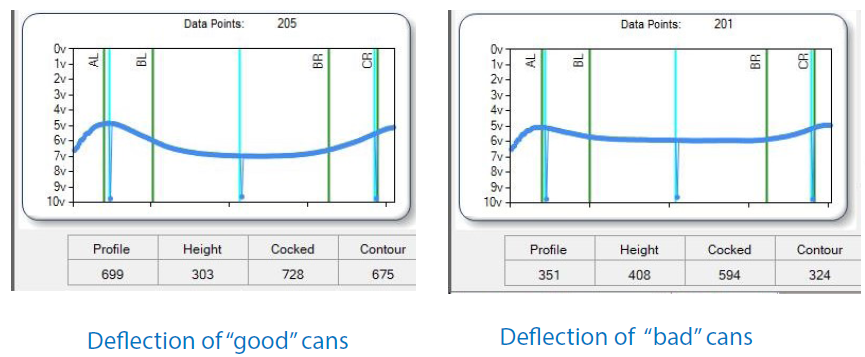
Proximity Technology - Measures pressure or vacuum in food cans, beverage cans, glass jars, and bottles with pop-up lids by measuring the lid deflection. The Proximity sensor produces a magnetic field that monitors the distance to the metal lid and produces a proportional analog voltage. The continuous proximity signal is digitally sampled to produce a merit value* of the lid profile. The profile value is then compared to user-set limits. Containers with lid deflection outside these limits are rejected.
Testing
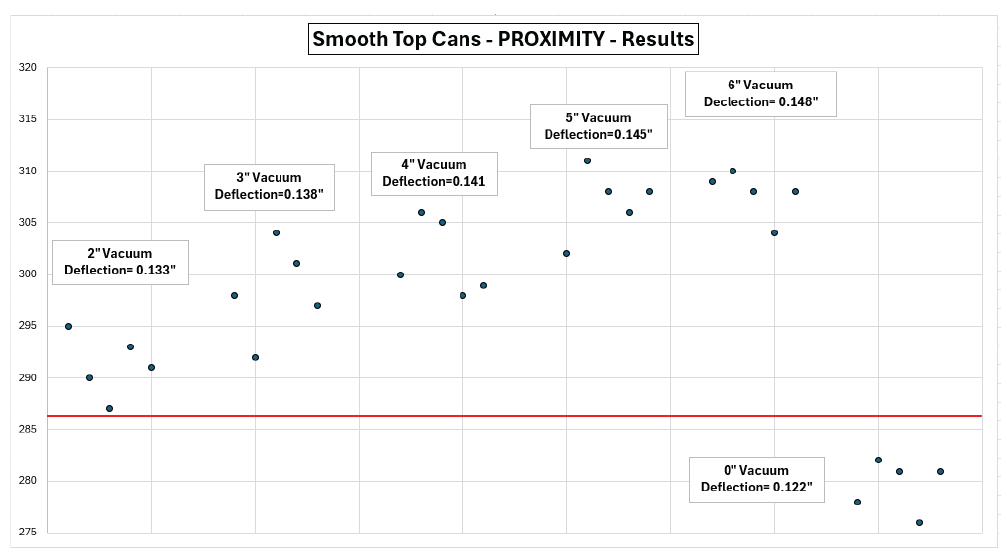
For this application, TapTone used a canned milk product in a 3-piece can for vacuum evaluation. The first samples tested were the sanitary ends (no pull-tab). To vary vacuum deflection for testing, a small hole was drilled near the top of the can and a copper tube was affixed (soldered) into place. The vacuum was set to values ranging from 0 vacuum to 6 inches (152.4 mm) of vacuum. The can was then passed through the proximity sensor five times to get an average merit value.* As shown on the chart, the differing values provided distinct merit values, with a clear separation between 0 and 2 inches (50.8 mm) of Vacuum.
In the second set of samples, cans with EZ open (pull-tab) tops were tested. The same method for varying the vacuum was used for a new range of 0 vacuum to 8 inches (203.2 mm) of vacuum. This provided distinct merit values, it is important to note that the position of the pull-tab does not affect the readings while the proximity head is taking a measurement.
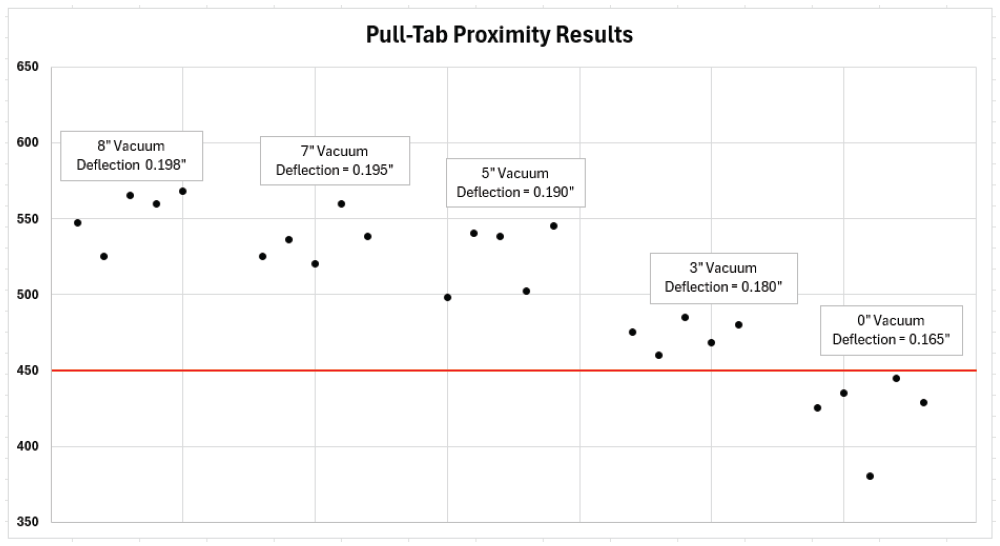
In a third set of samples, cans with pull-tabs were re-tested, however this time flipped upside down. In this test, ten (10) “good” cans were passed by the sensor upside down to obtain a “good” average merit value. One (1) can was then used to gradually increase the vacuum from 0 vacuum to 10 inches (254 mm) of vacuum. With the can upside down, the proximity sensor is able to determine the difference between 2 inches (50.8 mm) of vacuum and above.
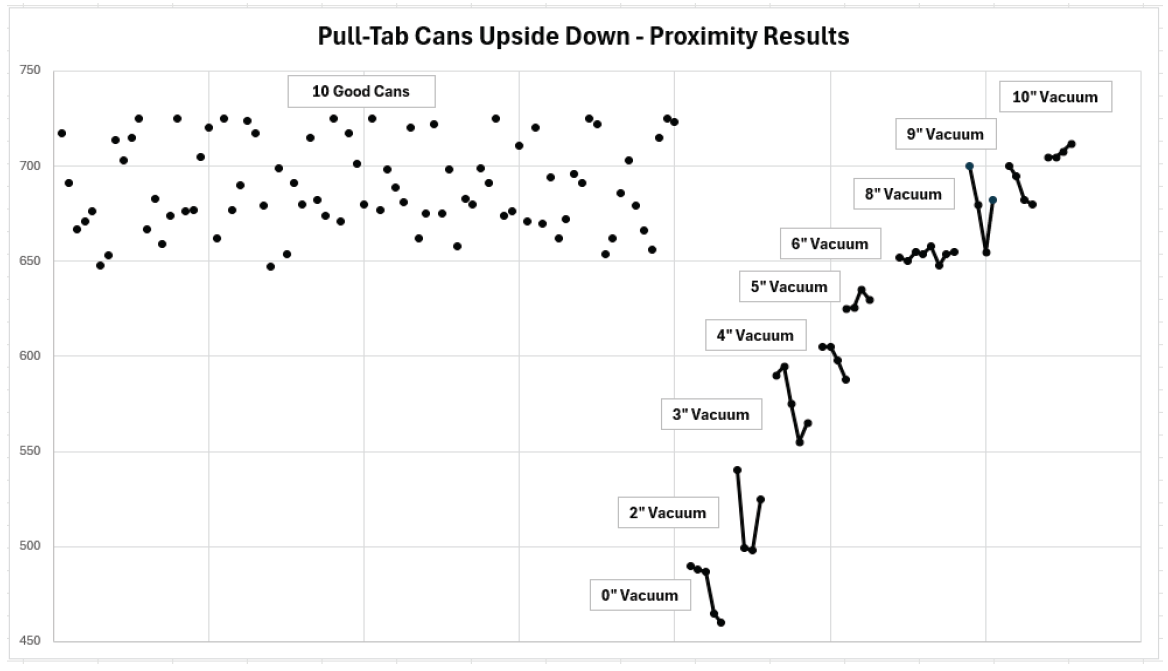
Summary
These tests demonstrate that the TapTone Proximity Sensor can consistently determine the integrity of a vacuum in smooth-top cans. In cans with pull-tabs, the Proximity sensor can consistently determine vacuum integrity when the can is sent through the machine upside down, as long as the bottom of the can is of the same rigidity as the top of the can.
* Merit value is a calculated number determined using an algorithm to compute a resultant from a set of data values. Depending on the application, the most effective merit value will be used to reject “bad” containers. Each can is inspected using four (4) algorithms and provides four (4) merit values.

