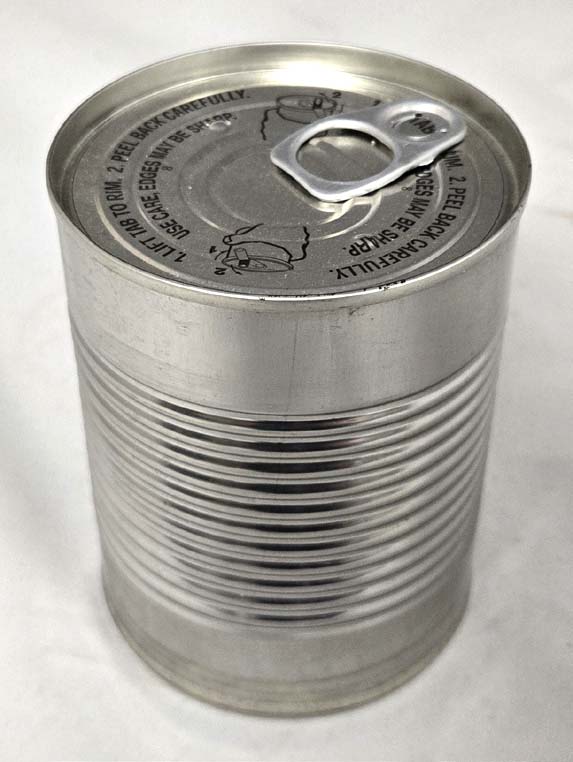
 Tested: Steel Food Cans for Seal Integrity and Fill Level
Inspection Requested: The purpose of this test was to prove the effectiveness of the TapTone system in determining seal integrity, proper vacuum, and fill level in food cans. Canners have long sought a remedy for the costly equipment failure and downtime that results when defective containers jam the continuous cooker or canning line. By combining a proximity sensor to measure lid curvature and an X-Ray sensor to measure fill level, the TapTone Proximity/X-Ray system detects and automatically rejects cans with defective lids, flat lids, missing lids, cocked lids, seam defects, knockdown flanges, dents, underfill and overfill, and low vacuum. With a TapTone system installed before the cooker, these defects are virtually eliminated, protecting the cooker from jam-ups.
TapTone Equipment Used: TapTone X-Ray and Proximity Sensors
How it works
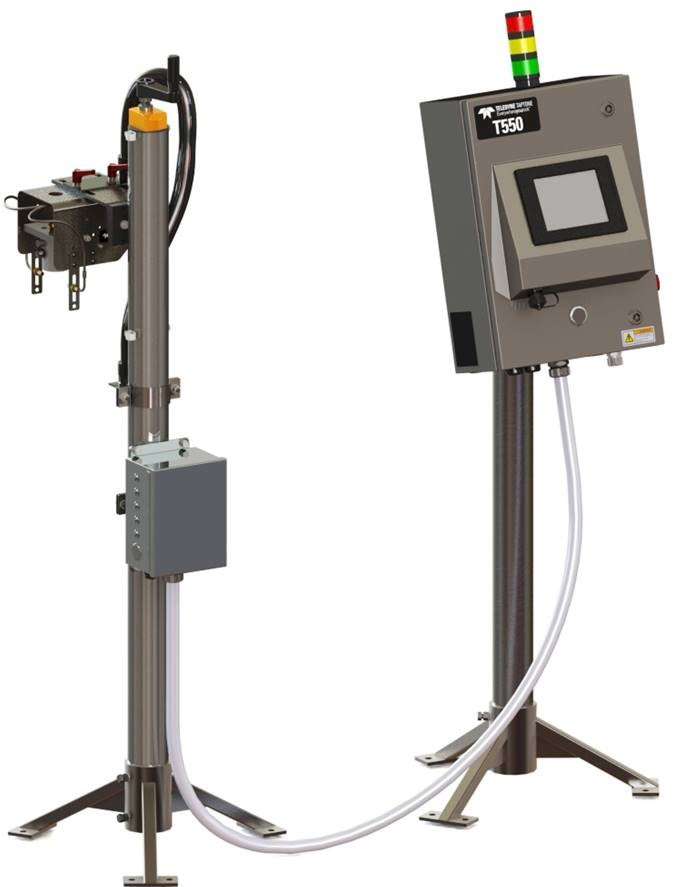
Proximity Technology - Measures pressure or vacuum in food cans, beverage cans, glass jars, and bottles with pop-up lids by measuring lid deflection. The Proximity sensor produces a magnetic field that monitors the distance to the metal lid and produces a proportional analog voltage. The continuous proximity signal is digitally sampled to produce a merit value* of the lid profile. The profile value is then compared to user-set limits. Containers with lid deflection outside these limits are rejected.
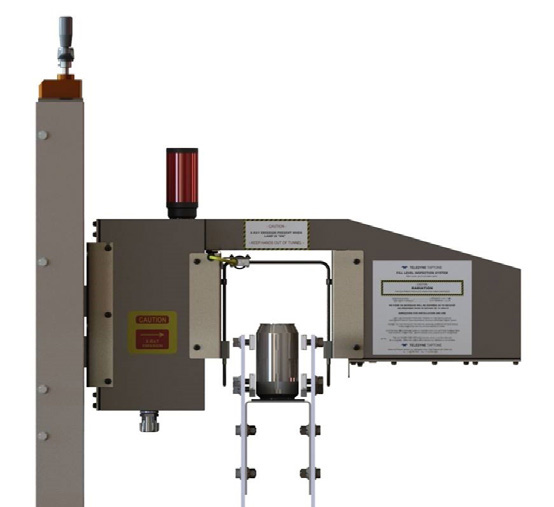 X-Ray Technology - Measures the product fill level in steel, aluminum, glass, plastic and paper containers. An X-Ray tube is used to produce a low-energy X-Ray beam. The X-Ray beam penetrates the side of the container in the area of the fill level. An X-Ray detector is positioned on the opposite side of the container to measure the intensity of the beam after it goes through the container. The intensity of the beam is then compared to acceptable energy levels to determine the relative fill level of each container. The X-Ray sensor is used to measure both overfilled and underfilled products in all types of containers.
Testing
The vacuum in a can is measured using TapTone’s proximity inspection system. The proximity sensor detects the deflection of the can end caused by the internal vacuum. In a series of tests conducted with this sensor, both sanitary can ends and EZ-Open containers were passed under the sensor. By measuring vacuum levels, containers that are improperly sealed or have broken seals can be identified and rejected from the production line, ensuring only high-quality products reach the consumer. For smooth-top cans, the sensor reliably detected vacuums as low as 3 inches. When testing pull-tab containers, the cans were inverted so the sensor could measure the bottom surface. This approach produced results similar to those for sanitary ends, with the sensor again detecting vacuums as small as 3 inches.
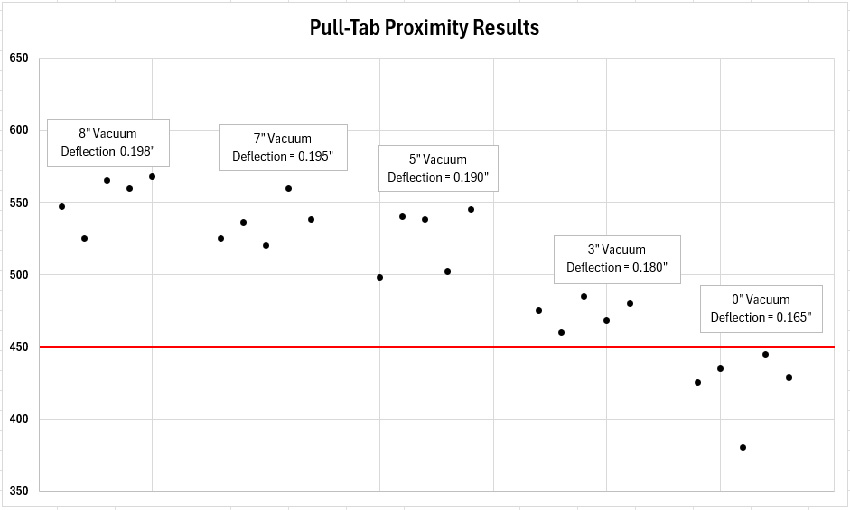
Underfill/overfill test:
The same variety of cans from the previous test were evaluated using the X-Ray sensor to measure fill levels. As the containers passed through the sensor, some were identified as underfilled and others as overfilled, demonstrating the sensor’s ability to differentiate between varying fill conditions.
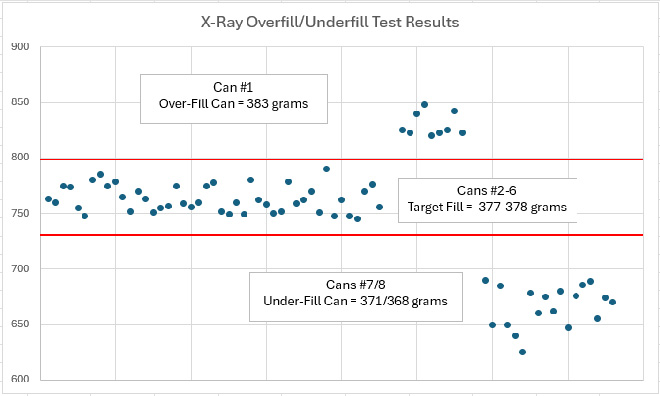
Underfills - Cans containing 371 g and 368 g of product were classified as underfilled. Passing these containers through the X-Ray sensor clearly distinguished them from cans with acceptable fill levels of 377–378 g. Detecting underfills is critical for both brand integrity and safety. Excess headspace in underfilled containers can expand during cooking, creating dangerous internal pressures that may cause cans to burst.
Overfills - One can containing 383 g of product was considered overfilled by the customer. When tested, the X-Ray sensor easily identified this deviation from normal fill levels. Detecting overfills is essential to ensure even cooking and maintain product quality.
Results
To ensure safety on the production line and for the customer, accurate fill level detection is critical. In underfilled containers, excess headspace can expand during cooking, creating dangerous internal pressures that may cause the can to burst.
Underfills - Cans containing 371 g and 368 g of product were classified as underfilled. Passing these containers through the X-Ray sensor clearly distinguished them from cans with acceptable fill levels of 377–378 g. Detecting underfills is essential for both brand integrity and consumer safety.
Overfills - One can containing 383 g of product was considered overfilled by the customer. Passing this container through the sensor demonstrated the device’s capability to easily differentiate it from normal containers. Detecting overfills is important when passing containers through a cooker to ensure the product is evenly cooked.
Conclusion
This series of tests demonstrates the capabilities of both the TapTone Proximity Sensor and the TapTone X-Ray System in detecting vacuum integrity and fill level in metal cans. When combined on the production line, these systems provide a comprehensive solution for quality assurance—rejecting faulty or improperly filled cans before they pass through the cooker or leave the production facility. The combination of these two technologies is highly recommended for applications requiring maximum product safety and consistency.
* Merit value is a calculated number determined using an algorithm to compute a resultant from a set of data values. Depending on the application, the most effective merit value will be used to reject “bad” containers. Algorithms for the Proximity Sensor include Profile, Height, Cocked, and Contour.

