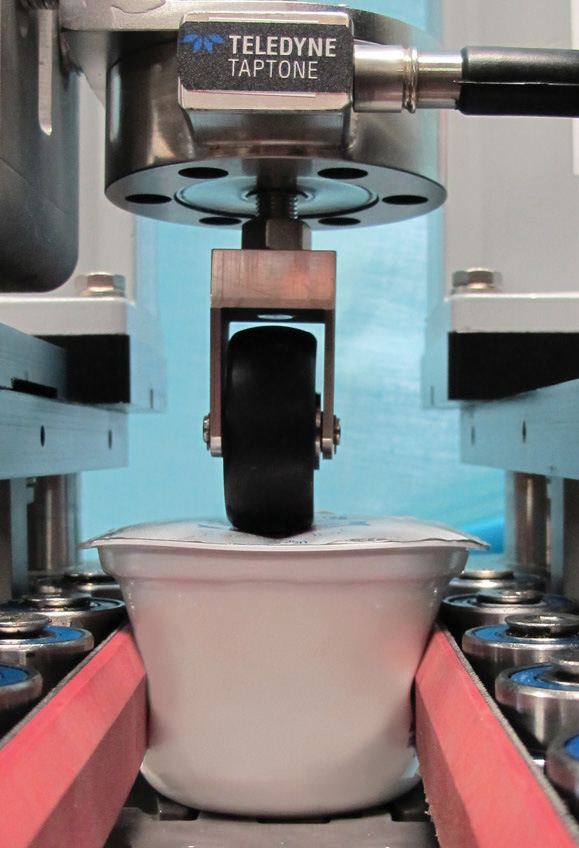
Tested: Coffee pods with plastic membrane seal closures
Inspection Desired: The purpose of this test was to verify the seal integrity of coffee pods for leaks
Tested with: TapTone T550 C-LP with TDLC sensor
With the growing popularity of the single serve coffee pod comes the need for manufacturers to insure proper seal integrity.
Teledyne TapTone has proven patented technology that can inspect one hundred percent (100%) of the container pods before the packages are shipped and the leaks are detected by the consumer.
Is Your Pod a Good Candidate for a T550 C-LP Inspection System?
Sidewall Flexibility Test - The easiest way to determine if a container is flexible enough to be compressed in a T550 C-LP is to place the container between your fingers and gently squeeze the sidewall. Use your thumb and forefinger to simulate the 1/2”compression belt height. If the container compresses to a point and stops, the container is typically a good candidate for compression testing. The size and shape of most coffee pods make them ideally suited for a T550 C-LP system outfitted with a TDLC sensor to yield the most sensitive and accurate method of leak detection.
How it works
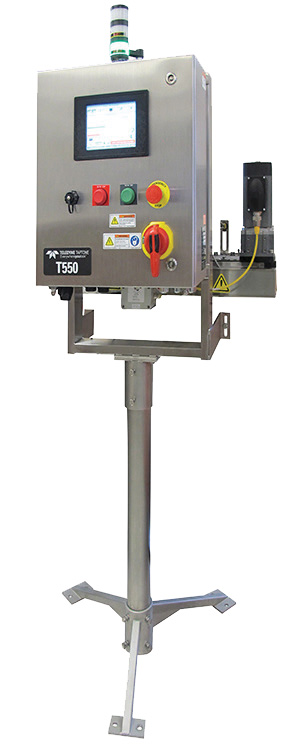
The T550 Compression System with Top Down Load Cell (TDLC) technology - finds and rejects leaking and damaged flexible coffee pods at production line speeds up to 300 feet per minute. By squeezing the container sides to create head pressure, doming of the foil or plastic seal is created permitting measurement of leak sensor merit values from above. Utilizing DSP technology, the controller analyzes the measurement and assigns a merit value to each container. If the merit value is outside of the acceptable range, a reject signal activates a remote reject system. This innovative TapTone design takes product inspection to a new level by offering customers the ability to meet the demand of leak detection in smaller, low profile style products.
TDLC Sensor
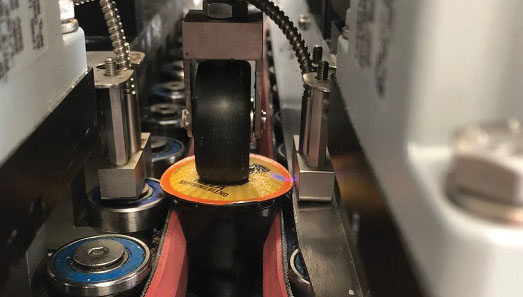 TapTone has expanded its product line of patented pressure inspection technologies with the introduction of our TDLC sensor. Squeezing the container sides creates head pressure, doming of the foil or plastic seal is created permitting measurement of merit values from above.
Testing Review
Three (3) sample sets were purchased locally for evaluation. The lids of these pods were already expanded due to the coffee de-gassing so minimal pressure on the sidewall was needed for testing. Eight (8) pods were tested several times on a rotary conveyor. Leaks were manually created using a precision drill and piercing the membrane near the edge.
Testing Summary
Testing results confirm leaks are detectable down to .008” depending on line speed and dwell time under compression. Larger holes (.010” – gross leaker) have greater than 10% change in Merit values from the normally sealed containers and are easily detectable with low limit settings. Visual observations confirmed that both the plastic container and the membrane closure showed no signs of wear during testing. See data below.
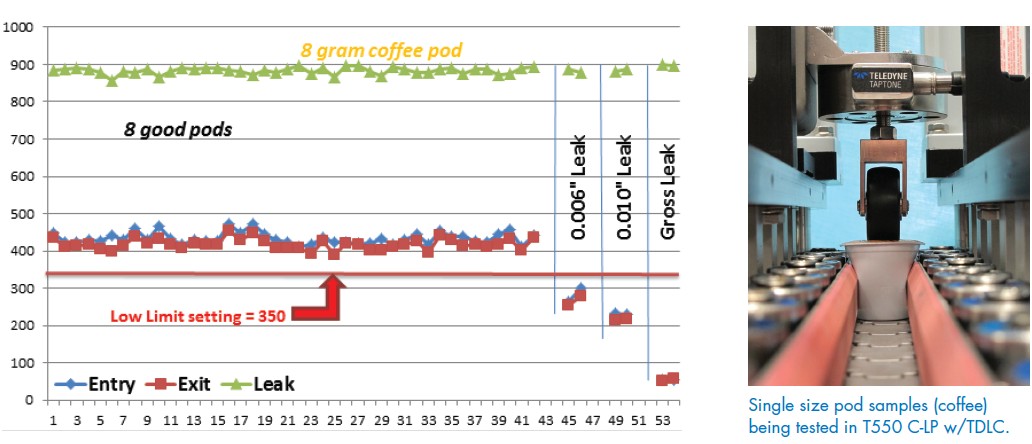
The T550 C-LP sensor with TDLC worked well on these style coffee pods. The T550 C-LP sensor with TDLC was able to detect a leak size of 0.008” and larger through the container and membrane closure. Testing at higher production speeds may result in a variance of minimum leak sizes. The T550 C-LP sensor with TDLC sensor can be recommended for the inspection of most single serve coffee pod applications.
Test results achieved in the test laboratory may be different from results seen in the production environment.

