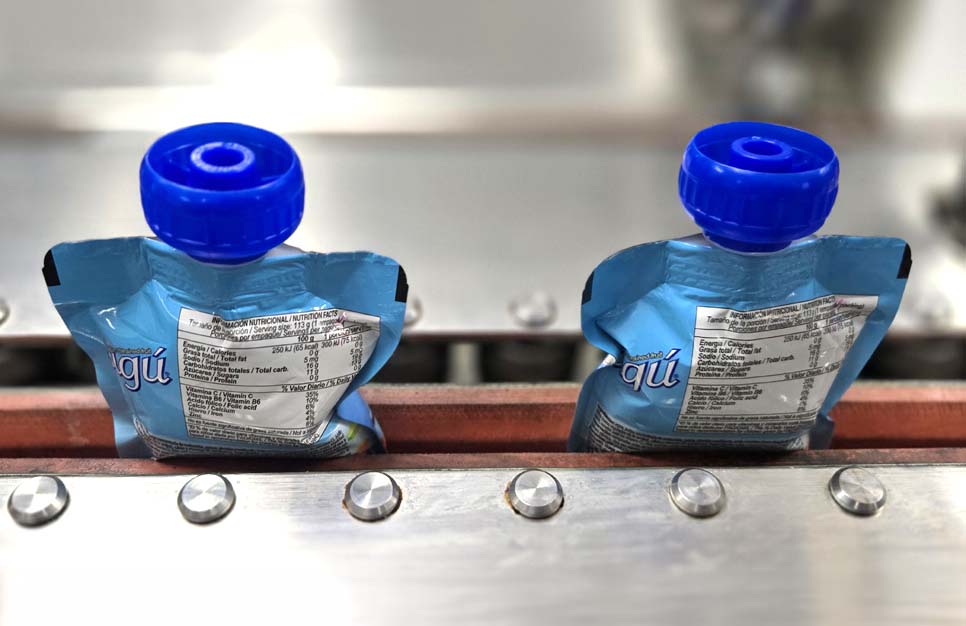
Tested: Aluminum Foil Pouches
Inspection Requested: The purpose of this test was to prove the effectiveness of the DSC Sensor in testing flexible pouches for leaks. Leaking pouches can offer contamination a point of entry into your product, which can cause product spoilage and potential health concerns for your consumers. The DSC sensor can test stand-up or gusseted pouches either hot or cold filled. Then DSC Sensor is ideal for finding potential leakers in flexible drink pouches before they leave your processing plant..
TapTone Equipment Used: TapTone Dual Sensor Compression (DSC)
How does it work ?
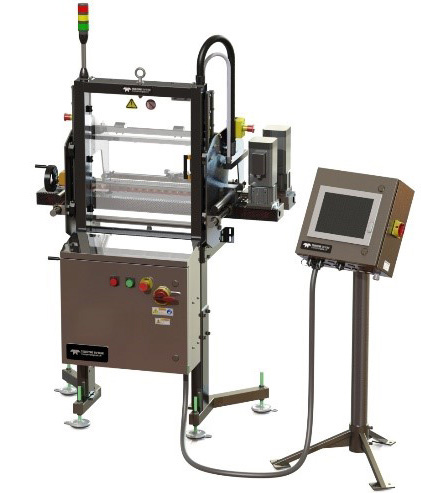 The Dual Sensor Compression system finds and rejects leaking and damaged flexible bottles at production line speeds up to 250 feet per minute. The system is designed with dual parallel belts suspended over the customers’ existing conveying system.
As the container passes through the system, the dual parallel belts apply force to the sidewall of the container. This action compresses the headspace of the container which allows a comparative measurement to be taken at both the infeed and the discharge of the system. Comparing the container to itself between the infeed and discharge of the system eliminates typical variations seen in the production environment (Fill Level, Product Temperature, and Container Density).
Utilizing proprietary DSP technology, the PRO Series user interface analyzes the comparative measurement and assigns a merit value to each container. If the merit value is outside the acceptable range, a reject signal activates a remote reject system.
Testing
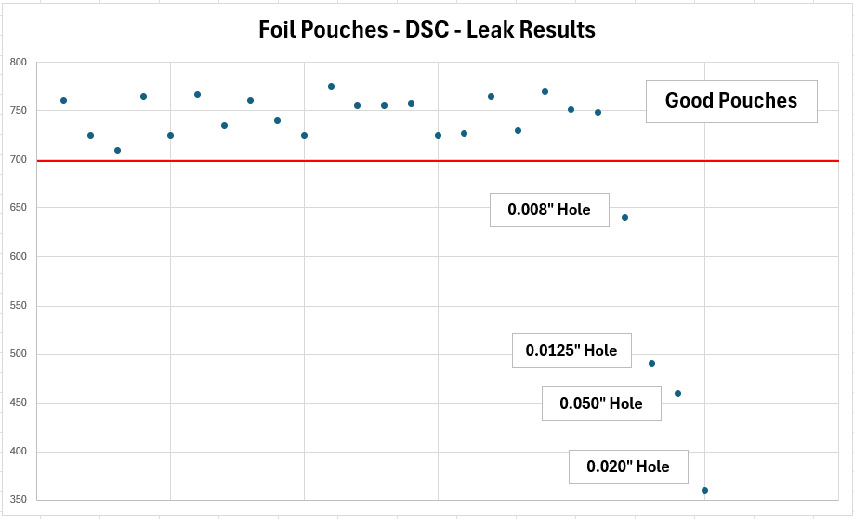
All testing performed compared non-leaking pouches to pouches with leaks. In the first test, the leaking pouches had precision hole sizes that ranged from 0.008 to 0.020 inches (0.203 mm to 0.508 mm). The good pouches were tested several times to get a larger population of non-leaking merit value readings. The leaking pouches were tested only once because of the loss of headspace, which is limited even in the good pouches.
During the compression cycle the sealed, non-leaking pouches generated an average merit value* of 750. The leaking pouches all showed good separation in values from the population of good pouches. The smallest hole size of 0.008” (0.203 mm) had a merit value of 643, which was 77 merit value points below a good, non-leaking pouch and was easily distinguishable from the values of the good pouches.
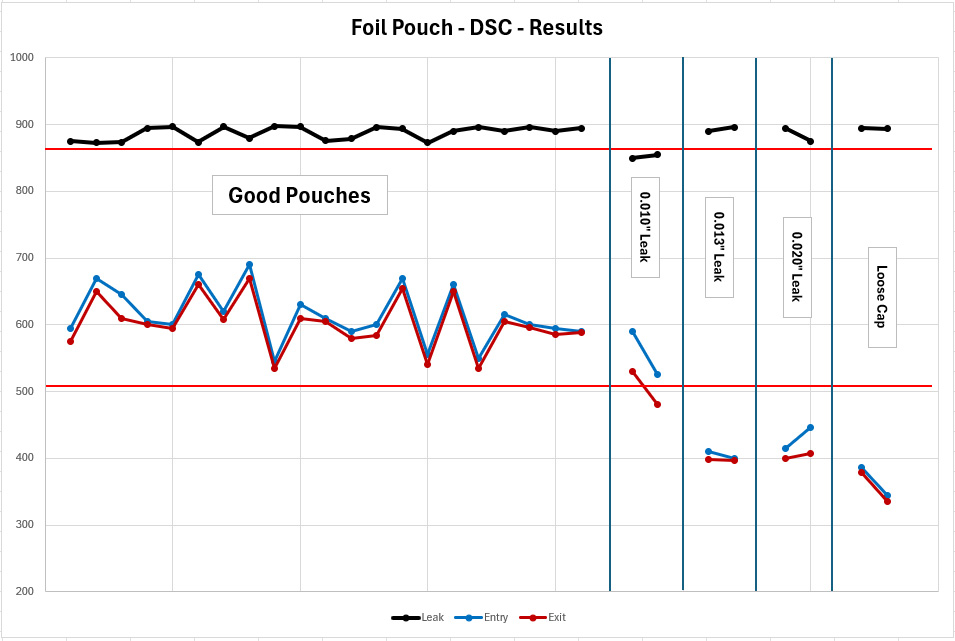
In the second test, eight (8) “good” pouches of applesauce were tested to obtain a “good” average merit value. In this test, the leaking pouches had hole sizes that ranged from 0.10 to 0.20 inches (0.330 mm to 0.508 mm). Again, the leaking pouches returned values easily distinguishable from the non-leaking pouches, though these values were Entry and Exit values, not Leak values.
Results
These tests demonstrate that the TapTone -Dual Sensor Compression (DSC) system can successfully detect leaks as small as 0.008 - 0.010 inches (0.203 - 0.330 mm). It is important to note that the DSC system requires the pouches to enter in a specific orientation. Sample testing is required for each product application to determine which set of merit values are to be used in detecting leaks because results may vary between products, as seen in testing.
* Merit value is a calculated number determined using an algorithm to compute a resultant from a set of data values. De-pending on the application, the most effective merit value will be used to reject “bad” containers. Algorithms for the Dual Sensor Compression sensor include Entry, Exit, and Leak.

