Tested: PET bottles with twist off caps
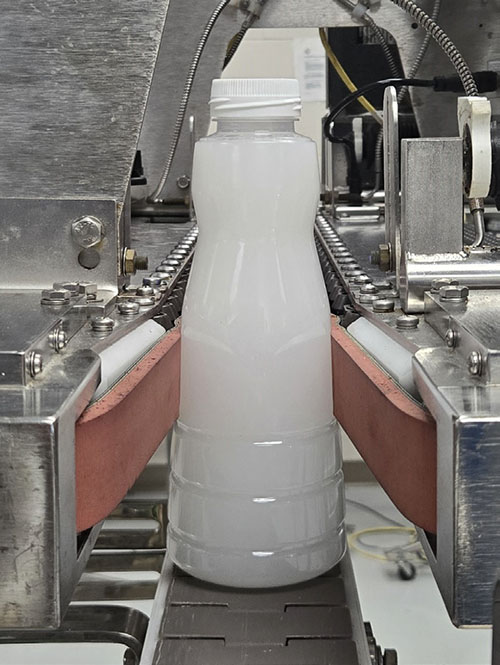 Inspection Requested: Packaging using PET bottles with twist-off tops is widely adopted across beverage, personal-care, and household product lines. However, variations in the injection and blow-molding process - particularly at the neck finish can result in subtle irregularities that prevent the twist-off closure from forming a proper seal. For manufacturers, these inconsistencies in sealing torque, thread engagement, and cap-to-finish compression can be difficult to detect with traditional inspection methods. This test demonstrated the effectiveness of TapTone’s Dual Sensor Compression (DSC) technology in identifying seal-integrity issues specific to PET bottles utilizing twist-off tops. Improper seals may lead to leakage, contamination, and in some cases, consumer safety concerns. The DSC system detects these defects early and reliably by measuring small changes in container response under compression, ensuring that compromised bottles are automatically rejected before reaching the marketplace.
TapTone Equipment Used: TapTone PRO-Series DSC
How it works
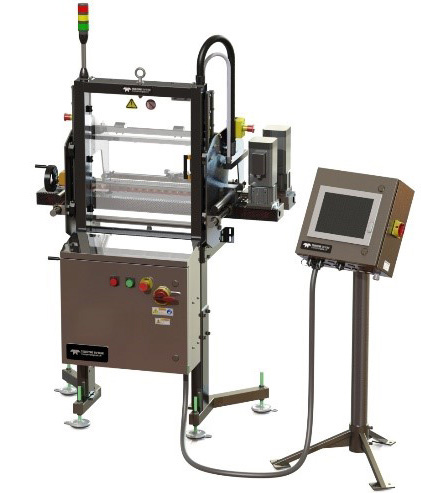 The Dual Sensor Compression system finds and rejects leaking and damaged flexible bottles at production line speeds up to 250 feet per minute. The system is designed with dual parallel belts suspended over the customers’ existing conveying system.
As the container passes through the system, the dual parallel belts apply force to the sidewall of the container. This action compresses the headspace of the container which allows a comparative measurement to be taken at both the infeed and the discharge of the system. Comparing the container to itself between the infeed and discharge of the system eliminates typical variations seen in the production environment (Fill Level, Product Temperature, and Container Density).
Utilizing proprietary DSP technology, the PRO Series user interface analyzes the comparative measurement and assigns a merit value to each container.
Testing Summary
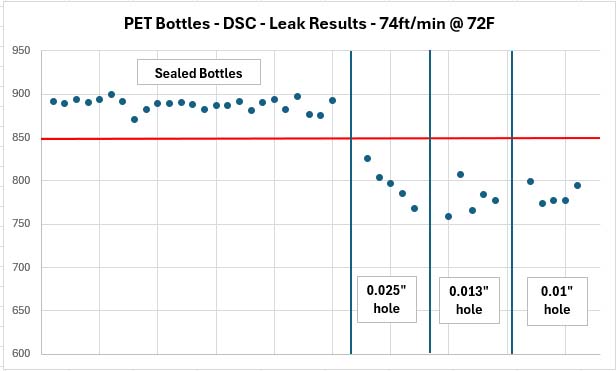
A total of eight bottles were evaluated using the PROS-DSC to demonstrate the system’s ability to reliably detect even very small leak defects repeatably.
Sealed Containers: Five bottles were confirmed to be properly sealed through testing, providing a strong baseline for comparison.
Defect Simulation: To challenge the system and validate sensitivity, three bottles were intentionally modified with precision-drilled 0.025”, 0.013” , and 0.010” holes. These represent leak sizes that are extremely difficult to detect with manual inspection or traditional sampling methods, providing a meaningful demonstration of the PROS-DSC’s advantage.
Testing results
Based on the test results, the PROS-DSC system clearly differentiates between properly sealed PET bottles with twist-off tops and those containing micro-leaks. The sealed bottles produced consistently high merit values, clustering in the 880–900 range. In contrast, bottles with leaks showed a pronounced drop in merit values immediately after the defect was introduced. This strong merit-value gap ensures high reject confidence even in applications where blow-mold cariation, fill-level variation, or cap torque issues might introduce natural population spread. These results underscore the DSC system’s exceptional resolution, repeatability, and reliability for PET packaging with twist-off tops—providing robust protection against leakage, contamination, and seal-integrity failures before products reach consumers.
*Merit value is a calculated number determined using an algorithm to compute a resultant from a set of data values. Depending on the application, the most effective merit value will be used to reject “bad” containers. Algorithms for the DSC Sensor include Entry, Exit, and Leak.

